
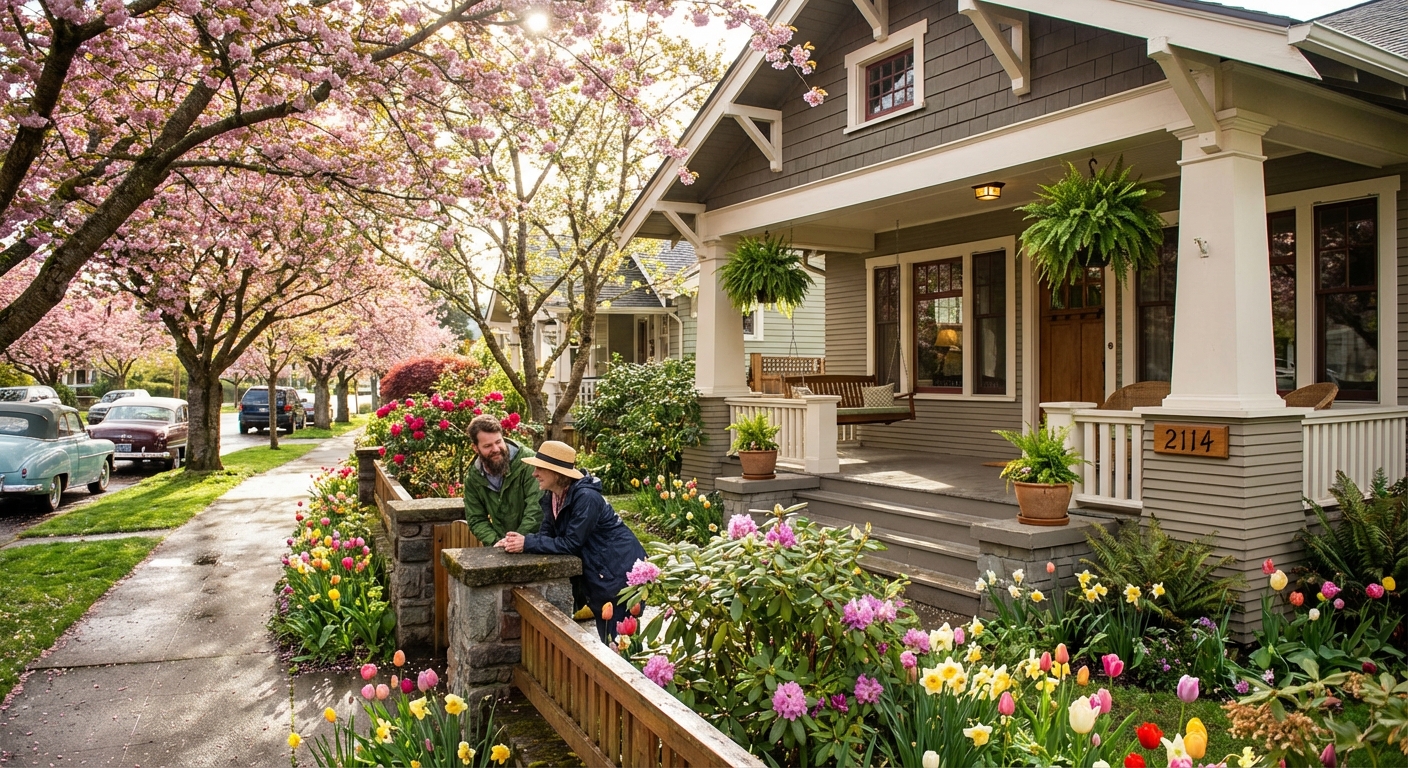
⚡ Quick Facts — Lettered Streets
Median Home Price: $650,000
Walk Score: 85
Median Rent: $1,850/mo
Best For: Walkability, Historic Homes
Vibe: Classic Bellingham
Distance to Downtown: Adjacent (5 min walk)
Nestled just north of downtown Bellingham, the Lettered Streets neighborhood stands as one of Washington’s most character-rich and historically significant communities. Dating back to the 1850s and developed primarily between the 1890s and 1920s, this charming district is home to some of Bellingham’s most distinctive architecture, vibrant community spirit, and unmatched walkability. The neighborhood takes its name from its simple but elegant street naming convention—Streets A through J run lengthwise through the neighborhood’s grid layout, creating a distinctive identity that sets it apart from other Bellingham communities. What began as a working-class neighborhood adjacent to the sawmills powered by Whatcom Creek has evolved into one of Bellingham’s most desirable residential areas, attracting young families, professionals, and longtime residents who appreciate the blend of historic charm, modern amenities, and authentic community character. With tree-lined avenues, front-porch architecture, and a genuine sense of neighborhood pride, the Lettered Streets offer something increasingly rare in modern American cities: a truly walkable, connected community where neighbors know each other and local businesses thrive. Whether you’re drawn by the stunning Victorian and Craftsman-style homes, the proximity to downtown shopping and dining, the excellent schools, or simply the opportunity to be part of a neighborhood with real character, the Lettered Streets deliver an exceptional living experience that keeps residents here for decades.
What Makes the Lettered Streets Special
Historic Architecture & Character
The Lettered Streets neighborhood is a living museum of early 20th-century American residential architecture. Home to an exceptional collection of Victorian, Craftsman, and Arts and Crafts-style homes, many of which have been meticulously restored to their original glory, this neighborhood showcases the building craftsmanship of a bygone era. Many homes feature original details: hand-split shingles, custom millwork, period-appropriate windows, and distinctive front porches that invite community interaction. Several historic landmarks enhance the neighborhood’s significance, including the Great Northern Depot (1927), the Aftermath Clubhouse (1914), the Roth Block (1890), and the First Congregational United Church of Christ, founded in 1883. The Pickett House, once owned by Confederate Captain George Pickett, adds another layer to the neighborhood’s historical tapestry. Walking through these streets feels like stepping back in time, yet the neighborhood has successfully balanced preservation with modern living, creating a community that honors its past while embracing contemporary life.
Walkability & Connected Community
The Lettered Streets neighborhood represents one of Bellingham’s best examples of true walkable urbanism. The grid layout, tree-lined streets, and pedestrian-friendly design mean that most residents can accomplish daily tasks—shopping, dining, exercise, socializing—entirely on foot. Downtown Bellingham is just a 10-minute walk away, putting exceptional restaurants, retail, entertainment, and waterfront access within easy reach. The neighborhood itself hosts excellent local businesses, coffee shops, bakeries, and gathering spaces that serve as natural community hubs. This walkability extends to bikeability as well; Bellingham’s excellent bike infrastructure makes the neighborhood ideal for cyclists of all ages and abilities. Parents appreciate being able to walk their children to school and local parks, while older residents value the health benefits of an inherently active lifestyle. The connected street grid means there are always multiple routes between destinations, making walks interesting and encouraging exploration.
Vibrant Community Vibe
Despite its historic character, the Lettered Streets neighborhood pulses with contemporary life and genuine community spirit. Front porches and street-facing windows create natural opportunities for neighborly interaction. The neighborhood supports numerous community organizations, block associations, and local events that bring residents together throughout the year. From community gardens to neighborhood associations actively involved in planning and preservation, residents demonstrate deep investment in their neighborhood’s future. The mix of longtime residents, young professionals, families, and students creates a dynamic demographic that keeps the community vibrant and forward-thinking. Local parks, green spaces, and gathering areas serve as natural community connectors, while proximity to Western Washington University brings youthful energy and cultural activities to the area.
Lettered Streets Sub-Areas
Upper Lettered Streets (A-D Streets)
The Upper Lettered Streets, comprising A Street through D Street, represent the heart of the neighborhood’s most prestigious residential area. This section features some of the neighborhood’s finest examples of Victorian and Craftsman architecture, with homes dating primarily to the 1890s-1910s era. The tree canopy here is particularly mature and magnificent, creating a park-like setting that enhances the neighborhood character. Streets A and B, closest to downtown, feature slightly higher density and are popular with professionals and empty-nesters seeking walkable downtown proximity. Streets C and D transition into larger lots and more spacious homes, popular with families who want both walkability and space. This area maintains excellent walkability to downtown retail, restaurants, and waterfront parks while preserving a distinctly residential character.
Lower Lettered Streets (E-J Streets)
The Lower Lettered Streets, from E Street through J Street, comprise the eastern and northern portions of the neighborhood. This area generally features slightly larger lots, more variety in home styles and ages, and increasing proximity to Western Washington University and the residential areas beyond. Homes here range from classic 1920s Craftsman bungalows to mid-century residences and some newer infill development. The neighborhood maintains its distinctive character while offering more housing diversity and affordability compared to the Upper Lettered Streets. Many properties near WWU feature rental homes popular with students and young professionals, creating a more transient but energetic community feel. Parks and recreational facilities in this area provide excellent outdoor amenities for families.
Holly Street Border & Commercial Edge
The Holly Street corridor, which forms the southern boundary of the Lettered Streets neighborhood, transitions from residential to commercial character. This area includes local shops, restaurants, breweries, and service businesses that serve both neighborhood residents and the broader Bellingham community. The mix of adaptive historic commercial buildings and newer businesses creates a vibrant, walkable business district that adds tremendous vitality to the neighborhood. Residents appreciate the access to these amenities without the noise or congestion that would come from commercial activity within the core residential area. Holly Street serves as a natural gathering place and community hub, with regular foot traffic throughout the day and evening.
Sehome Hill Adjacent
The neighborhoods to the east and north of the core Lettered Streets, sometimes included in the broader Lettered Streets area, transition toward the Sehome Hill neighborhood and residential areas near Western Washington University. These areas maintain similar architectural character and walkable charm while offering slightly larger lots and a bit more separation from downtown activity. The proximity to campus brings a youthful energy and cultural programming, including university events, guest speakers, and performances. Parks and natural areas become more prevalent in this transitional zone, offering excellent recreation without compromising walkability.
Housing in the Lettered Streets
Housing in the Lettered Streets neighborhood spans a diverse range of architectural styles, property types, and price points, making it accessible to different buyers and renters while maintaining distinctive character throughout.
Victorian Homes
Victorian-era homes, primarily from the 1890s-1910s, represent the neighborhood’s earliest and most architecturally significant residences. These homes typically feature elaborate exterior detailing, wraparound porches, bay windows, original moldings, and high ceilings. Victorian homes in the Lettered Streets typically range from 1,800-3,500+ square feet and command premium prices due to their historical significance and architectural quality. Many have been lovingly restored to maintain original details while incorporating modern plumbing, electrical, and HVAC systems. These homes appeal to buyers who value craftsmanship, history, and distinctive character, and are often priced from $900,000 to well over $1.5 million depending on location and condition.
Craftsman & Bungalow Homes
Craftsman-style homes, developed primarily between 1910-1930, represent the neighborhood’s largest architectural category. These homes feature distinctive elements: exposed beams, built-in shelving, wood shingle siding, stone or brick foundations, and emphasis on horizontal lines and natural materials. Craftsman bungalows typically offer 1,200-2,500 square feet of living space on modest lots, making them ideal for families, first-time buyers, and those prioritizing walkability over space. These homes generally range from $750,000 to $1,200,000, offering somewhat more accessible pricing than older Victorian properties while maintaining strong architectural character. The efficient floor plans and honest construction methods characteristic of the Craftsman movement have made these homes increasingly popular with contemporary buyers.
Mid-Century & Newer Infill
The neighborhood also includes mid-century homes (1930s-1970s) and more recent infill construction that respects neighborhood character while offering modern floor plans and amenities. Some properties feature charming mid-century ranch or split-level designs, while newer homes are typically designed to complement neighborhood aesthetic. These properties typically offer good value and may include updated systems, but generally lack the historical charm of earlier homes. Prices vary widely based on location, condition, and amenities, typically ranging from $650,000 to $1,000,000 for solid residential properties.
Rental Market
Rental properties in the Lettered Streets are abundant, particularly in areas closer to Western Washington University (E-J Streets). Both single-family homes and converted multi-unit properties offer rental options ranging from $1,200-$3,500+ monthly depending on property size, condition, and location. The neighborhood’s walkability, transit access, and proximity to campus make it highly desirable for renters, particularly students and young professionals. Rental properties tend to appreciate steadily and offer solid cash flow, making them attractive investment opportunities.
Things to Do in the Lettered Streets
One of the greatest assets of the Lettered Streets neighborhood is the incredible array of activities and amenities within walking distance or a short bike ride.
Downtown Bellingham
Downtown Bellingham, just a 10-minute walk away, offers exceptional shopping, dining, and entertainment. The downtown core features boutique retailers, galleries, bookstores, and specialty shops alongside major retailers. Restaurants range from casual cafes to upscale dining establishments, with particular strength in innovative farm-to-table dining and diverse cuisines. The Old Town corridor offers historic charm and character, while the waterfront provides scenic beauty and recreational access. The Bellingham Farmers Market, operating year-round with excellent selection and community atmosphere, serves as a neighborhood gathering place and social hub.
Parks & Recreation
The Lettered Streets neighborhood benefits from exceptional proximity to parks and natural areas. Maritime Heritage Park and Waypoint Park, both within walking distance, offer waterfront access, trails, and recreational facilities. These parks are ideal for families, offering playgrounds and open green space alongside scenic water views. Larrabee State Park, just north of the city, provides hiking trails, mountain views, and water access. Cornwall Park and other neighborhood green spaces offer community gardens, sports facilities, and quiet gathering areas. The Bellingham Bay waterfront itself provides jogging paths, beach access, and scenic beauty that enhance the neighborhood’s outdoor recreation opportunities.
Dining & Breweries
The Lettered Streets area has become a destination for dining and beverage culture. Holly Street and nearby corridors feature an excellent selection of breweries, craft beverage establishments, and restaurants that range from casual to upscale. The neighborhood supports innovative small businesses, many operated by locals invested in the community. Coffee shops and bakeries dot the neighborhood, serving as informal gathering spaces for residents and workers. The food scene reflects Bellingham’s commitment to local sourcing, sustainability, and culinary creativity. Whether seeking a casual lunch, craft beer, or special occasion dining, options abound within easy walking distance.
Cultural & Educational
Proximity to Western Washington University brings cultural programming, guest lectures, performances, and exhibitions. The university’s galleries, theaters, and event spaces offer regular programming open to the community. The Whatcom Museum, located downtown, provides art, history, and cultural exhibitions. The neighborhood itself supports local art galleries, bookstores, and cultural venues. Libraries, including the Bellingham Public Library’s main branch downtown, provide cultural and educational resources. Regular community events, farmers markets, and street festivals create ongoing opportunities for cultural engagement and community connection.
Schools
The Bellingham School District, consistently rated among Washington’s top districts, serves the Lettered Streets neighborhood with excellent schools at all levels. Families in the neighborhood are zoned to elementary schools known for strong academics, engaged parent communities, and well-maintained facilities. Middle and high schools in the district offer robust academic programs, arts, athletics, and extracurricular opportunities that develop well-rounded students. School buildings reflect community investment and pride, with active parent organizations supporting enhanced programming. Many Lettered Streets residents, particularly those with children, choose the neighborhood specifically for school quality combined with walkable, family-friendly neighborhoods. The proximity to Western Washington University also creates ongoing educational and cultural enrichment opportunities for residents of all ages.
Getting Around the Lettered Streets
Walkability
The Lettered Streets neighborhood ranks among Bellingham’s most walkable areas, with the historic grid layout and street-connected design making pedestrian access straightforward. Most residents report being able to accomplish daily errands on foot, including grocery shopping, dining, banking, pharmacy needs, and social activities. Tree-lined streets with sidewalks on most corridors create pleasant walking conditions. The neighborhood’s compact size and connection to downtown make walking the natural choice for many daily trips. Walkability is not merely a convenience but a quality-of-life feature that residents actively value and protect through community engagement.
Biking
Bellingham’s commitment to bike infrastructure makes the Lettered Streets ideal for cyclists. Protected bike lanes, trail systems, and street connections facilitate safe biking to schools, work, shopping, and recreation. The neighborhood’s relatively flat terrain and grid layout make biking accessible for riders of all ages and abilities. Many residents bike year-round, taking advantage of Bellingham’s moderate climate. The culture of cycling in the Lettered Streets is visible in the abundance of bikes parked outside shops and residences, and the regular presence of cyclists on neighborhood streets. Bike racks, bike parking, and local bike shops support the cycling community.
Public Transit
Public transit options connect the Lettered Streets to broader Bellingham and regional areas. Local bus service with stops throughout the neighborhood provides convenient connections to downtown, the waterfront, shopping centers, and Western Washington University. Regular service and reasonable frequency make transit viable for many residents, particularly those without vehicle access or preferring not to drive. The transit system supports environmentally conscious living and reduces the need for vehicle ownership or use. Transit service has been expanding, with ongoing improvements to infrastructure and service frequency enhancing connectivity.
Driving
While the neighborhood emphasizes walkability and alternative transportation, vehicle access remains important for many residents. The grid street layout distributes traffic efficiently, avoiding congestion from major corridors running through core residential areas. Parking is generally available on streets, with some residents utilizing garage parking. The neighborhood’s proximity to major arterials (I-5, Bay Street, State Street) provides convenient highway access for commuters or those needing regional connections. However, the success of the Lettered Streets lies partly in the fact that car dependency is reduced through excellent walkability and transit options.
Who Should Live in the Lettered Streets?
The Lettered Streets neighborhood appeals to a diverse range of residents, each drawn by different aspects of neighborhood character.
Young Professionals & Empty Nesters: Those seeking walkable urban living close to employment, dining, and entertainment find the Lettered Streets ideal. The proximity to downtown and lack of need for a car appeals to those building careers and enjoying active urban lifestyles. Smaller Victorian and Craftsman homes on A and B Streets offer optimal downtown proximity with neighborhood character.
Families: Families valuing walkable neighborhoods, excellent schools, and community connections thrive in the Lettered Streets. The safe, tree-lined streets encourage children’s outdoor play and independence. Schools are excellent, and the neighborhood culture emphasizes community support and child safety. Families with teenagers benefit from the abundance of activities and employment opportunities within walking distance.
Historic Preservation Enthusiasts: Those passionate about historic architecture and preservation find the Lettered Streets compelling. Restoration projects, historic research, and community preservation efforts provide meaningful engagement. The neighborhood’s architectural diversity offers something for every taste, from elaborate Victorians to functional Craftsman bungalows to mid-century modern homes.
Environmentally Conscious Residents: Those committed to sustainable living appreciate the Lettered Streets’ walkability, transit access, and reduced car dependency. The neighborhood’s strong community focus and preservation values align with broader environmental consciousness. Local food systems, farmers markets, and neighborhood businesses support local and sustainable living.
Investors & Landlords: The Lettered Streets neighborhood, with strong appreciation history and robust rental demand, appeals to real estate investors. Properties rent reliably, appreciate steadily, and maintain value through community stability and desirability. The proximity to Western Washington University creates consistent demand for rental properties.
Homes for Sale in the Lettered Streets
Frequently Asked Questions About the Lettered Streets
What is the real estate market like in the Lettered Streets?
The Lettered Streets real estate market has historically been strong, with steady appreciation reflecting the neighborhood’s desirability, limited supply of historic homes, and walkable character. Inventory levels vary seasonally, with higher supply in spring and summer and lower inventory in fall and winter. Homes typically remain on the market for reasonable periods depending on price and condition, with well-maintained homes selling briskly. The neighborhood appeals to owner-occupants and investors alike, creating stable demand. Properties appreciate above Bellingham averages, reflecting neighborhood premium. Prices range from approximately $650,000 for smaller homes or significant fixer-uppers to $1.5 million+ for well-maintained historic residences in prime locations.
Is the Lettered Streets a safe neighborhood?
The Lettered Streets neighborhood benefits from strong community engagement, active neighborhood associations, and good relations between residents and law enforcement. Crime rates are generally comparable to or below Bellingham averages. The walkable design with active street life creates natural surveillance and community presence that deters crime. Longtime residents often report feeling safe walking and biking at all hours, though like any urban neighborhood, normal urban awareness and precautions are appropriate. The strong sense of community and neighborhood pride contributes to safety and quality of life.
What about parking in the Lettered Streets?
Street parking is generally available on most Lettered Streets, though availability varies by time of day and location. Many properties feature garages, carports, or dedicated parking areas. Properties closer to downtown may have more limited parking, though the neighborhood’s walkability and transit access reduce parking needs. Some residents live car-free, managing entirely through walking, biking, and transit. Property parking availability and costs should be factored into decisions, particularly for those in vehicle-focused lifestyles or with multiple household vehicles. Many residents appreciate the reduced parking stress compared to larger cities.
How long does it take to commute from the Lettered Streets to Seattle or other area destinations?
The Lettered Streets neighborhood offers convenient access to regional destinations. Seattle is approximately 90 minutes away via I-5, making it feasible for occasional commuting or day trips but not ideal for daily commuting. Vancouver, BC, is about 90 minutes north. The San Juan Islands ferry terminal is accessible within 30 minutes. Mt. Baker ski resort is approximately 90 minutes east. For most residents, Bellingham itself provides ample employment, entertainment, and cultural opportunities, reducing the need for regular regional commuting. Those with Seattle employment typically pursue remote work arrangements or plan for extended commutes.
What is the neighborhood’s position on historic preservation and future development?
The Lettered Streets neighborhood has a strong preservation ethic, with active community involvement in planning and development. The neighborhood association engages actively with city planning processes to ensure development respects neighborhood character. Many blocks feature homes on or eligible for historic registers, which can provide tax incentives but also restrict renovations. The city of Bellingham has design guidelines and neighborhood plan provisions protecting character while allowing sensitive development. New construction must typically respect neighborhood aesthetic and scale. The community is engaged in ensuring that growth occurs thoughtfully and respectfully, preserving what makes the neighborhood special while allowing modest evolution.
Living in the Lettered Streets: Your Next Home Awaits
The Lettered Streets neighborhood represents something increasingly rare in American cities: a truly walkable, historic community with authentic character, engaged residents, and genuine sense of place. Whether you’re seeking a Victorian gem, a charming Craftsman bungalow, or modern living in a neighborhood with soul, the Lettered Streets offer exceptional quality of life with unmatched downtown proximity. The combination of historic architecture, walkable design, excellent schools, vibrant community culture, and strong investment fundamentals makes the Lettered Streets an exceptional place to live. With established neighborhood character, strong preservation values, and active community engagement, living here means becoming part of something meaningful—a neighborhood where history meets modern living, where walking is a pleasure, and where community truly matters.
Ready to explore homes in the Lettered Streets? Contact Tommy Mutchler, your local real estate expert, to discuss available properties, investment opportunities, or neighborhoods that match your lifestyle. Whether you’re buying, selling, or simply curious about this remarkable neighborhood, I’m here to help you find your perfect Bellingham home.
Selling a Home in Lettered Streets
The Lettered Streets neighborhood is one of Bellingham’s most sought-after areas, known for its walkable grid streets, charming early-1900s homes, and vibrant community feel. Homes here rarely sit on the market long, and the neighborhood’s character and central location make it a perennial favorite.
What Lettered Streets Buyers Are Looking For
Lettered Streets attracts buyers who value walkability, community, and historic charm above all else. You’ll see young families, professionals, artists, and downsizers competing for the same homes. Buyers look for well-maintained Craftsman and Victorian homes, updated kitchens and bathrooms that respect the home’s era, usable outdoor space, and the ability to walk to coffee shops, restaurants, and parks.
Lettered Streets Market Snapshot
- Median home price: $625,000 – $850,000
- Average days on market: 8-18 days — one of the fastest-selling neighborhoods in Bellingham
- Buyer demand: Extremely high — limited inventory creates consistent competition
- Best time to list: Any time, but spring (March-June) brings the most buyers
Preparing Your Lettered Streets Home to Sell
Lettered Streets homes sell themselves on character — but smart preparation still matters. Preserve and highlight original woodwork, built-ins, and architectural details. Updated kitchens and bathrooms with period-appropriate finishes (subway tile, butcher block, classic hardware) perform better than ultra-modern renovations. Curb appeal is critical on these tight lots — fresh paint, a maintained front garden, and a welcoming porch make a huge difference.
Thinking About Selling Your Lettered Streets Home?
Get a free, personalized market analysis from a local expert who knows what Lettered Streets buyers want and what your home is worth.