
Bellingham Homebuying Trip: Neighborhood Tour Checklist
Build your visit around available homes, a few contrasting neighborhoods and the routes you would use every week. This checklist uses Fairhaven, Sunnyland and Cordata as practical comparison stops, then gives you a worksheet for the home, the route and the ownership costs.
Three Bellingham neighborhoods to compare on a scouting trip
Fairhaven, Sunnyland and Cordata give you three different settings to investigate. Use these examples when they fit your budget and home search, and replace a stop if the available properties do not meet your needs. Start with actual listing addresses, then use the city's neighborhood maps to check where they sit.
Test life near the historic center.
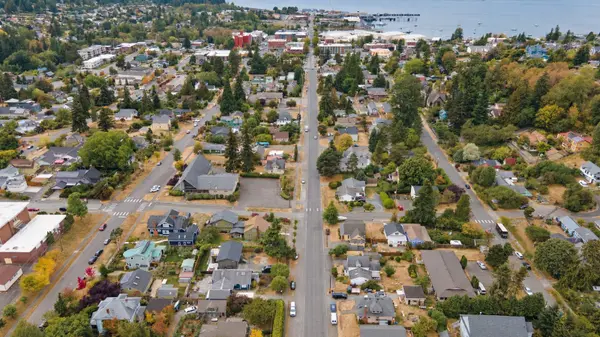
The city's Fairhaven overview describes a mix of houses, apartments and condominiums around a historic commercial center. The Village Green and public library give you recognizable destinations to include in a walk.
On your visit: walk from a home you are considering to the places you would use. Check crossings, grades, the return route and where your own vehicles would park. For a condominium, compare storage, parking rights and association costs along with the interior.
Compare the home and its immediate block.
The city's Sunnyland overview places neighborhood businesses around Alabama and James streets and describes older houses alongside multifamily, commercial and industrial uses.
On your visit: look at the streets immediately around the property, then walk a route you would use for an errand. For an older home, write down questions about maintenance records, drainage, electrical work and usable parking to resolve through documents and inspection.
Test your north Bellingham routines.
The city's Cordata overview locates the neighborhood north of West Bakerview Road and west of Meridian Street, with Whatcom Community College and a mixture of residential and other uses.
On your visit: start at the actual listing and test the route to work, shopping or another regular destination. Compare the property's outdoor space and maintenance responsibilities. Check its own association documents when applicable; the neighborhood name does not tell you the fees.
Turn those stops into a useful homebuying trip
- Before traveling: review available homes in your price range and arrange confirmed showing appointments. Ask which listing details or documents need clarification before a property earns a place on the tour.
- Between showings: leave room to walk one relevant route and make notes. Group appointments by location so the schedule leaves time to examine homes.
- Before leaving Bellingham: revisit your strongest candidate's surroundings at another relevant time, when practical. Identify the properties and unresolved questions for your next conversation.
Bring the comparison worksheet below. Record the same home, route and cost questions at each stop so the differences are easier to assess.
If you're still choosing where to begin, use the Bellingham neighborhood overview to build a preliminary list. Then use this visit method to test that list against your own priorities.
1. Decide what you are testing before you arrive
Write down your comfortable total housing budget, the type of home you are considering and the destinations you would visit regularly. Include the features that would change your decision: stairs, driveway grade, a workspace, parking, outdoor space, maintenance or access to a particular route.
Separate must-haves from preferences. “Room for two vehicles” is testable. “A neighborhood that feels right” is useful as a personal impression, but it needs detail before it can guide a search. Describe what creates that feeling for you rather than treating someone else's neighborhood ranking as a rule.
Choose the questions.
Budget. Housing type. Important destinations. Three must-haves. One trade-off you would accept.
Test ordinary routines.
Walk a relevant route. Check parking and slopes. Notice what you would actually use during a normal week.
Resolve the unknowns.
Confirm boundaries, school assignment, property documents, recurring costs and condition before relying on them.
2. Compare places using the same questions
A visit works best when each location gets the same test. If you walk one area slowly but only drive through another, your notes will describe two different experiences. Start with a short, consistent route around an actual home or a convenient public meeting point.
| What matters to you? | What to test in person | What to verify separately |
|---|---|---|
| Doing more errands on foot | Walk the route from a relevant address to a place you would actually use. Notice crossings, grades and continuity. | Actual destination, access and opening hours. A neighborhood label does not establish walkability for every home. |
| A manageable commute | Try the route near the time you expect to travel, when practical. | Current transit schedules or a time-specific route estimate. One quiet weekend drive is only one observation. |
| Predictable ownership costs | Notice maintenance responsibilities, shared spaces and parking arrangements. | Taxes, insurance, utilities, association documents and likely property-specific repairs. |
| Outdoor space or a view | Look from the actual home and usable outdoor areas, at a relevant time of day. | Property lines, easements, public access, restrictions and any plans affecting your intended use. |
| A specific school or program | Consider the practical route and transportation needs. | The district's current address lookup and enrollment information; proximity alone does not establish assignment. |
3. Look beyond the listing's best photograph
A listing photo can help you decide which home to visit. It cannot tell you the full maintenance story or replace looking at the property yourself. Check how the outdoor space is used, how vehicles enter and turn, and whether the features you need work in practice. Ask for documents and professional evaluation when a question affects the purchase.
For a condominium or a home with an association, ask what the current dues cover and obtain the relevant governing and financial documents. Do not assume every home in a named community shares identical rules or costs. For a rural property, use the Whatcom County septic and private well guide to organize questions about the records and property-specific review.
4. Use an address for school and access questions
The Bellingham School District provides boundary maps and an address lookup. Use those tools for a home you are considering and confirm any enrollment or program question with the district. A school named in a neighborhood article is not a guarantee for a particular address.
Apply the same care to water access, trails and parks. A water view does not necessarily include access rights. A route that looks connected on a small map may require a different path on the ground. Check official public information and property documents where relevant.
5. Finish with a shorter list and better questions
After each stop, write down one advantage, one trade-off and one unanswered question. You do not need to crown a winning neighborhood on the first visit. A productive result might be “keep these two areas, change the home type and verify the driveway and association costs on the next three listings.”
If you are relocating, the moving-to-Bellingham guide provides broader planning context. Your next step is to connect that plan to actual available homes and the details that matter to you.
Your neighborhood comparison worksheet
Use one column per area or property. Record your observations, then list the facts that still need verification.
| Comparison | Place / address A | Place / address B | Place / address C |
|---|---|---|---|
| Home type and condition | |||
| Routes, parking and access | |||
| Recurring costs to verify | |||
| Main advantage / trade-off | |||
| Unanswered question |
Next action: choose two places or three homes to investigate further.
Copy these questions into your notes and bring them on your next visit.
Tommy Mutchler · Real Broker LLC · (360) 312-4410 · tommymutchler.com/contact
Questions before your visit
How many neighborhoods should I compare?
Start with three if your needs are still broad. That is a planning suggestion, not a rule. A narrower list gives you more time to examine real routes and homes instead of collecting quick impressions.
Should I choose a neighborhood before looking at homes?
Develop a preliminary shortlist, then test it against actual homes, costs and availability. Your search may change once you understand which property features matter most.
Can I use a neighborhood's median price as my budget?
A median describes a particular set of sales or listings over a stated period. It does not price an individual home. Compare the relevant home type, condition and location, and check the date and definition behind the figure.
- City of Bellingham neighborhood maps
- City of Bellingham: Fairhaven
- City of Bellingham: Sunnyland
- City of Bellingham: Cordata
- Bellingham School District: schools and boundaries
Research reviewed September 9, 2026. Recheck property-specific information as your search progresses.
Categories
Recent Posts






Local Bellingham Agent
Tommy Mutchler
Thinking about a move in Whatcom County?
I'll help you stay competitive and make your next move feel easy. Book a free, no-pressure Home Goals call and leave with a clear plan.
Connect With Tommy15 minutes • No obligation
GET MORE INFORMATION