
Moving to Bellingham, WA: A Local Agent's Relocation Guide (2026)
Relocation Guide · Whatcom County, WA
By Tommy Mutchler — Real Estate Agent, Real Broker LLC, Whatcom County WA · Last updated: July 14, 2026

A sailboat on Bellingham Bay from Boulevard Park. Bellingham sits on the water between Seattle and Vancouver, BC. Photo: Robert Ashworth, CC BY 2.0.
Moving to Bellingham, WA means trading big-city prices for a mid-size coastal college town between Seattle and Vancouver, BC. Expect a 2025 median home price near $755,000, mild but rainy winters, quick access to Mount Baker and the San Juan Islands, and a walkable, outdoor-focused lifestyle that draws remote workers, retirees, and students alike.
What this guide covers
Where is Bellingham, and what is it known for?
Bellingham is the largest city in Whatcom County and the last major stop on Interstate 5 before the Canadian border. It sits on Bellingham Bay, wrapped between the water to the west and the foothills of the North Cascades to the east, with Mount Baker looming on the horizon. The city has grown from about 81,000 residents in 2010 to roughly 92,000 today — a jump of around 13.6% — and the wider county keeps drawing people who want the Pacific Northwest without a big-city price tag or big-city grind. You can see the official figures on the U.S. Census Bureau QuickFacts page.
What people know Bellingham for is the combination: a real, walkable downtown and the historic Fairhaven district, a state university in the middle of town, and an almost absurd amount of outdoor access on all sides. When I show the area to people relocating from out of state, the thing that lands hardest isn't any single attraction — it's that you can ski Mount Baker in the morning and be walking a saltwater trail by late afternoon, all from the same zip code.
What does it cost to live in Bellingham, WA?
Housing is the line item that will define your budget. In 2025 the median sale price for a home inside Bellingham was about $755,000, with an average closer to $866,000 because higher-end waterfront and view homes pull the average up. Zoom out to Whatcom County as a whole — including Ferndale, Lynden, Everson, and the more rural areas — and the median drops to roughly $625,000. Over the most recent three-month window the county median was around $609,000, down about 2.7% year over year, so the market has cooled slightly from its peak rather than kept climbing. You can watch these numbers move in near-real time on Redfin's Bellingham market page.
Affordability is the honest asterisk on all of this. A 2025 analysis found a Whatcom County household needed to earn roughly $180,000 — about 167% of area median income — to comfortably afford the median home. Washington also has no state income tax, which helps, but property and sales taxes and general cost of living run above the national average. If you're coming from California or the Seattle metro, Bellingham will likely feel like a relief; if you're coming from the Midwest or the South, it will feel expensive. Both reactions are normal.
| Housing snapshot (2025–26) | Figure |
|---|---|
| Bellingham median sale price | ~$755,000 |
| Whatcom County median sale price | ~$625,000 |
| County median, last 3 months | ~$609,000 (down ~2.7% YoY) |
| Income to afford median home (2025) | ~$180,000 (~167% AMI) |
Figures are approximate and change monthly. Sources: Redfin and Cascadia Daily News, 2025–26. Confirm current numbers before making an offer.
Already own a home you'll sell before you move? Whatcom County prices vary block to block, and a generic online estimate rarely captures view corridors, lot size, or condition. Get a free, local home valuation so you know your real starting number.
What are Bellingham's neighborhoods and nearby towns like?
One of the first questions I get from people moving here is simply "where should we look?" Bellingham is small enough to learn quickly but varied enough that the right area depends on what kind of housing and daily rhythm you want. Describing places by their housing stock and geography — not by who lives there — here's the lay of the land.
Fairhaven and the South Side are for buyers who want walkability and historic character: 1890s brick storefronts, a ferry terminal, and a premium price to match. Downtown and the Lettered Streets mix older homes with condos and quick access to the city core. Barkley and Cordata, on the north and east sides, skew newer — townhomes, planned developments, and shopping close at hand. Edgemoor, on the bluff south of Fairhaven, is the city's traditional high-end waterfront-view pocket. And around Lake Whatcom and Sudden Valley you'll find lake-oriented homes on wooded lots with HOA amenities.
Plenty of newcomers end up just outside the city, where the same budget buys more square footage or land. Ferndale (where my office is) offers newer subdivisions and an easy I-5 commute; Lynden has a distinctive small-town Main Street and farmland on the edges; and Birch Bay and Blaine put you on the water near the border. For a fuller tour of the city itself, my Living in Bellingham overview goes deeper on each area.
What is the weather really like in Bellingham?
Let's address the reputation directly: yes, it's gray in winter, but Bellingham is drier than most people expect. The city averages about 35 inches of rain per year — actually a touch less than Seattle — but that rain is spread thin across a long cool season from roughly October through April. You get drizzle and overcast skies far more than downpours. The local tourism board's weather page is refreshingly candid about this.
The payoff is summer. From about July through September, Bellingham turns into one of the most pleasant places in the country: warm, dry, long evenings, and Bellingham Bay glowing at sunset. The climate is classified as mild oceanic, so hard freezes and heat waves are both rare. My honest advice to anyone relocating: visit in February and August before you commit, so you meet both versions of the year. If you're energized by the outdoors regardless of a little cloud cover, you'll thrive. If gray skies genuinely sink your mood, that's worth knowing up front.
What is the job market and economy like?
Bellingham's economy leans on healthcare, education, refining, and a growing base of remote and small-business work. Healthcare and higher education are the two biggest anchors: PeaceHealth St. Joseph Medical Center is the region's major hospital, and Western Washington University is one of Whatcom County's largest employers. Western enrolled about 14,651 students in the 2024–25 year and supports thousands of jobs directly and indirectly — the university's own economic impact report puts its footprint at roughly 3,381 local jobs.
Two large petroleum refineries near Ferndale and Blaine anchor the industrial base, and the Port of Bellingham, retail, and tourism round things out. Realistically, many of the buyers I work with today either bring a remote job with them or commute regionally — the local white-collar job market is real but not deep, so newcomers relying on landing a specific corporate role should research their field before committing.
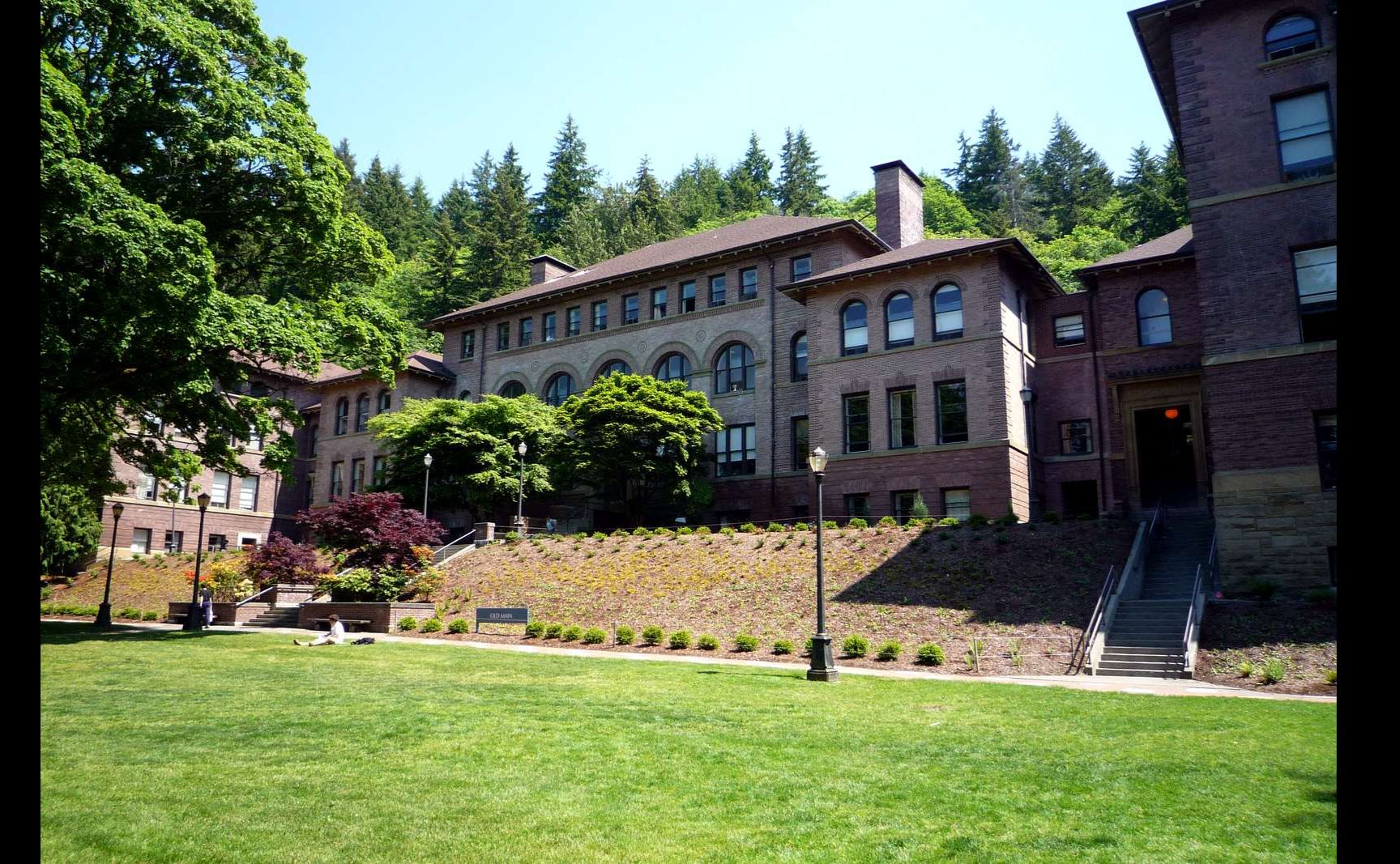
Old Main at Western Washington University, one of Whatcom County’s largest employers, anchors Bellingham’s education economy. Photo: Tommy Mutchler (adapted from Bobak Ha’Eri, CC BY 3.0).
How do you get around, and how far is everything?
Bellingham is a driving city at heart, but it's better connected than its size suggests. Interstate 5 runs right through it, putting Seattle about 90 miles south (usually a 90-minute drive, longer in traffic) and the Canadian border about 20 miles north, with Vancouver, BC roughly 52 miles beyond that. For a small city, that's a rare position — two major metros within easy weekend reach.
You don't always need to drive, either. Bellingham International Airport (BLI) offers nonstop service on Alaska/Horizon and Allegiant, which is a genuine quality-of-life perk for avoiding the drive to Sea-Tac. The Amtrak Cascades train stops in Fairhaven, running south toward Seattle and north to Vancouver, BC, and the Bellingham Cruise Terminal is the southern end of the Alaska ferry system. Around town, the WTA bus network and a strong trail system make a car-light life possible in the denser neighborhoods.
The outdoor lifestyle: why most people actually move here
Ask ten newcomers why they chose Bellingham and the outdoors will come up nine times. Mount Baker Ski Area, about an hour east, famously recorded 1,140 inches of snow in the 1998–99 season — still a world record — and stays open late into spring. To the west, the San Juan Islands are a short hop by ferry or boat, and the Chuckanut Drive scenic byway (Highway 11) hugs the coast just south of town with some of the best water views in the state.
Closer in, the city itself is laced with trails: the Interurban Trail, the waterfront boardwalk from Fairhaven to Boulevard Park, and the forests around Lake Padden and Galbraith Mountain, which has become a nationally known mountain-biking destination. This is the part I never oversell, because it sells itself — if your ideal weekend involves a trail, a summit, or a paddle, Bellingham makes that the default rather than the exception.

Mount Baker, about an hour east of Bellingham, holds the world snowfall record for a single season. Photo: Lhb1239, CC BY-SA 3.0.
Moving to Bellingham from Seattle: what does your money buy?
A large share of the people relocating here come from the Seattle metro, and the calculus is usually the same: swap a shorter commute and more nightlife for more house, more nature, and a slower pace. Bellingham's median price, near $755,000, sits meaningfully below King County's, so many buyers find they can trade a condo or a small city lot for a full single-family home with a yard — or step out to Ferndale or Lynden and get newer construction and even more space for the money.
The honest trade-offs: the professional job market is thinner, the "big city" amenities are fewer, and winter is grayer than you might like. But for remote workers, families, and anyone who has decided that weekend access to mountains and saltwater matters more than a downtown skyline, the math tends to work. It's no longer the hidden bargain it was a decade ago — but compared to the metros most transplants leave, it still feels like room to breathe.
Thinking about a move to Whatcom County?
I help buyers relocating from Seattle, out of state, and across the border find the right community the first time. Start with a real, local read on your home’s value or browse what’s on the market.
Frequently asked questions about moving to Bellingham, WA
Is Bellingham, WA a good place to live?
Bellingham is consistently popular with people who want a mid-size, walkable college town close to the outdoors. You get Bellingham Bay, Mount Baker, and the San Juan Islands nearby, a lively downtown and Fairhaven district, and a location between Seattle and Vancouver, BC. The main trade-offs are a rainy winter and home prices that have climbed well above the national average.
How much does it cost to move to Bellingham, WA?
The biggest cost is housing. Bellingham's median sale price was about $755,000 in 2025, while Whatcom County as a whole was closer to $625,000. Renters and buyers should budget for prices above the national average, though Bellingham is generally more affordable than the Seattle metro.
How far is Bellingham from Seattle and Vancouver, BC?
Bellingham sits roughly 90 miles north of Seattle and about 52 miles south of Vancouver, BC. By car that is usually around 90 minutes to Seattle and about an hour to the Canadian border, traffic and border waits permitting.
Does it rain a lot in Bellingham?
Bellingham averages around 35 inches of rain per year, which is actually a bit less than Seattle. The rain is spread across a long, gray, cool season from roughly October through April, rather than falling in heavy downpours. Summers are famously dry and mild.
What is the job market like in Bellingham?
Healthcare and higher education anchor the local economy, with PeaceHealth St. Joseph Medical Center and Western Washington University among the largest employers. Western enrolled about 14,651 students in 2024–25 and is one of Whatcom County's top employers. Many newcomers also work remotely or commute regionally.
Where should I live when moving to Bellingham?
It depends on what you want. Fairhaven and downtown suit buyers who want walkability and historic character; Barkley, Cordata, and the outlying areas of Ferndale and Lynden offer newer construction and more space. Waterfront and view pockets like Edgemoor carry a premium. Touring a few areas in person is the best way to decide.
About the author — Tommy Mutchler. I'm a real estate agent with Real Broker LLC serving Bellingham, Ferndale, and all of Whatcom County. I help buyers relocating from Seattle, out of state, and across the border find the right community — and sellers price their homes with real local data, not just an algorithm. Learn more about me or request a free home valuation.
Categories
Recent Posts





Local Bellingham Agent
Tommy Mutchler
Thinking about a move in Whatcom County?
I'll help you stay competitive and make your next move feel easy. Book a free, no-pressure Home Goals call and leave with a clear plan.
Connect With Tommy15 minutes • No obligation
GET MORE INFORMATION