
Living in Fairhaven, Bellingham WA: A Local Agent's Neighborhood Guide
NEIGHBORHOOD GUIDE · BELLINGHAM, WA
By Tommy Mutchler — Real Estate Agent, Real Broker LLC, Whatcom County WA · Last updated: July 13, 2026
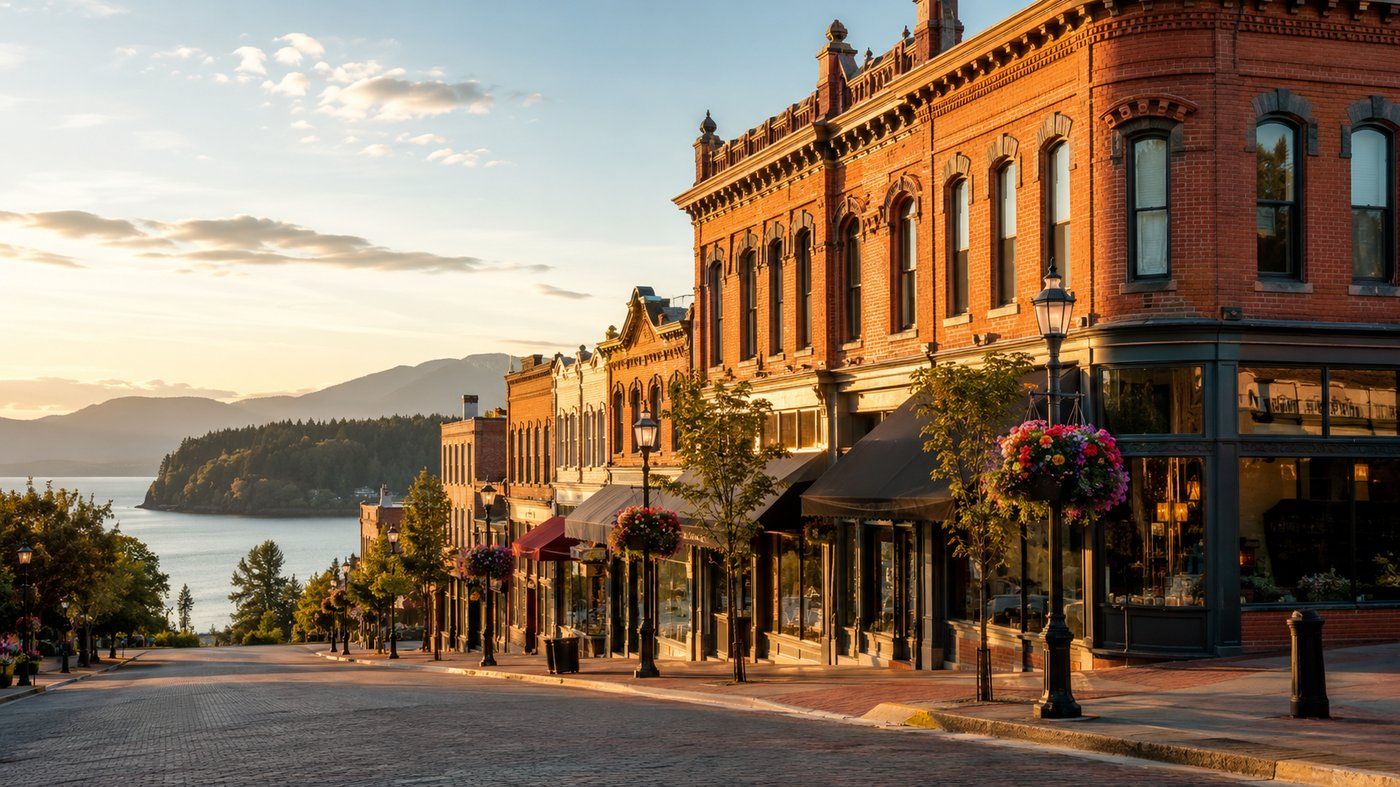 Historic Fairhaven Village, south Bellingham, on the shore of Bellingham Bay.
What this guide covers
Where is Fairhaven, and how does it feel?
Fairhaven sits at the southern edge of Bellingham, hugging the shoreline of Bellingham Bay at the north end of the Chuckanut Drive scenic byway. A ridge called Sehome Hill separates it from downtown, which is part of why Fairhaven has always felt like its own distinct place rather than just another Bellingham neighborhood. Locals still sometimes call it “South Bellingham,” a nod to the era when it was quite literally a separate city.
What strikes most people first is the architecture. The core of the district is a compact grid of red-brick buildings from the 1890s, now filled with independent shops, cafés, galleries, and pubs. Walk a few blocks toward the water and you reach parks, a working ferry terminal, and trails that trace the bay. Whenever I bring buyers here for the first time, the reaction is almost always the same: they slow down. Fairhaven is one of the few places in Whatcom County where you can genuinely live car-light and still have your morning coffee, your bookstore, your dinner spot, and a waterfront walk all within a few minutes on foot.
A quick history: from ‘Dirty Dan’ to a protected historic district
Fairhaven was platted in 1883 by Daniel J. Harris — the colorful “Dirty Dan” Harris of local legend — who named it after a Coast Salish word, see-see-lich-em, often translated as “safe port” or “quiet place.” In the late 1880s the town exploded with speculation, as investors bet it would become the western terminus of the Great Northern Railroad. For a brief window around 1890, Fairhaven was a booming rival to the neighboring town of New Whatcom (today’s downtown Bellingham), powered by lumber and shingle mills, coal, and a large salmon cannery.
The railroad terminus never fully materialized the way boosters hoped, and by 1904 Fairhaven had consolidated with its neighbors into the City of Bellingham. After World War II the district faded as business shifted downtown, and many historic buildings sat empty. Its revival began in the early 1970s, when former resident Ken Imus returned and started buying and restoring the old brick blocks. That effort culminated in 1977, when the core was designated the Fairhaven National Historic District, protecting a cluster of buildings dating from 1888 to 1929. For homebuyers, that history isn’t just charming trivia — it’s the reason the neighborhood’s character has stayed remarkably intact. You can read more from the City of Bellingham’s historic district page.
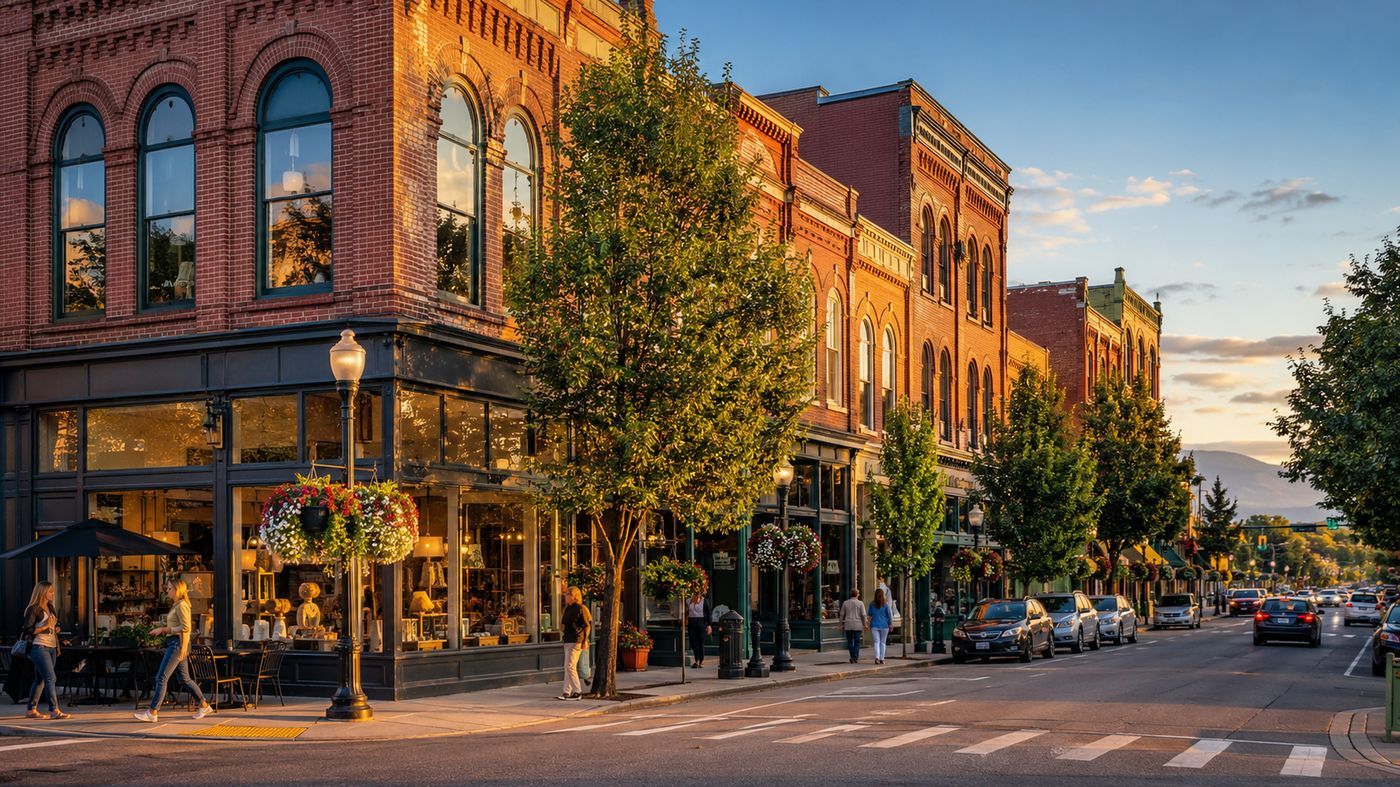 Independent shops and restaurants line Fairhaven’s walkable brick streets.
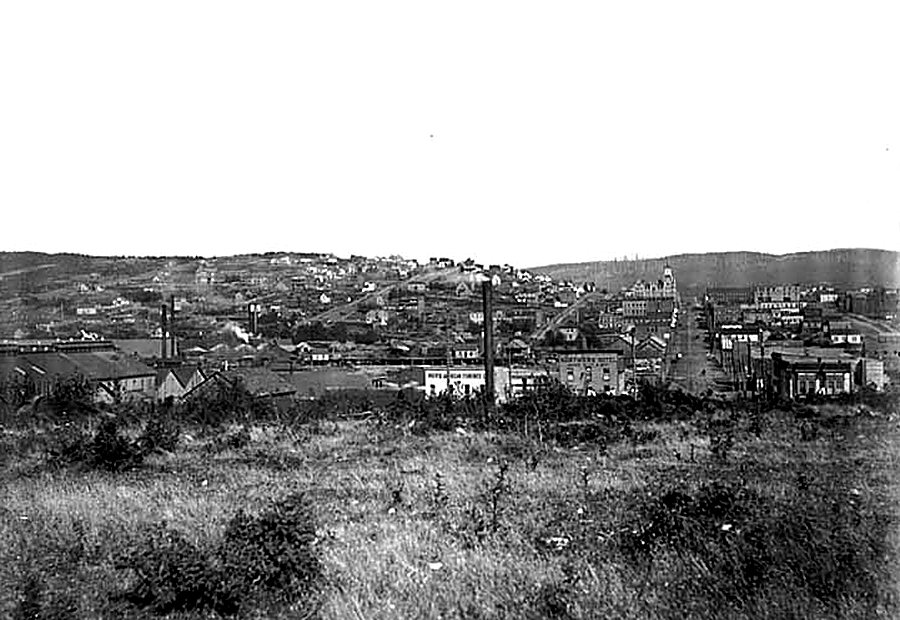
Fairhaven in July 1900, a decade after the boom that built its brick downtown. Photo by H. Ambrose Kiehl, public domain.
What do homes cost in Fairhaven in 2026?
Fairhaven is one of Bellingham’s premium neighborhoods, and the numbers reflect it. As of 2026, the median sale price in Fairhaven has been running around $725,000, according to Redfin’s neighborhood data, with some sources putting the figure closer to $740,000. For comparison, the median across Bellingham as a whole has been near $630,000 over the same period — so buying in Fairhaven typically means paying roughly a 15% premium for the location, walkability, and character.
It’s a competitive pocket. Well-priced, move-in-ready homes here can attract multiple offers, and inventory is genuinely limited by the district’s small footprint and protected historic core. That said, the market has cooled from the frenzy of a few years ago: days-on-market have stretched out compared to the peak, which gives thoughtful buyers a little more room to breathe than they’d have had in 2021 or 2022.
| Metric (2026) | Fairhaven | Bellingham (citywide) |
|---|---|---|
| Median sale price | ~$725,000 | ~$630,000 |
| Typical entry point (condo) | ~$400K–$700K | Varies widely |
| Single-family homes | Generally from ~$650K | — |
| Market temperature | Competitive; limited supply | Competitive |
Figures are approximate and change month to month. Sources: Redfin and Zillow neighborhood data, mid-2026. Always confirm current numbers before making an offer.
The housing stock: Victorians, condos, and modern infill
Fairhaven’s housing is more varied than the brick village center suggests. On the hillside streets around the district you’ll find late-1800s and early-1900s homes — Victorians and craftsman-era houses, many lovingly restored, some still waiting for it. These carry the most character and, often, the quirks that come with a century-old house: original layouts, older systems, and the kind of updates a buyer should budget for.
Closer to the village and along the waterfront, condos and townhomes dominate. This is where a lot of first-time buyers, downsizers, and second-home owners land, with units frequently ranging from the low $400,000s into the $700,000s depending on size and view. Finally, there’s newer infill and mixed-use construction near the village green and along the bay, offering modern finishes and low-maintenance living within walking distance of everything. In short: whether you want a restored 1900 home, a lock-and-leave condo, or something new, Fairhaven usually has a version of it — just not many at once.
What is it like to live in Fairhaven day to day?
The short answer: walkable, social, and outdoors-oriented. The village center anchors daily life, home to Village Books — one of the most beloved independent bookstores in the country — along with coffee shops, restaurants, breweries and taphouses, and a rotating calendar of events on the Fairhaven Village Green, from summer outdoor movies to a seasonal farmers market and live theatre.
Step toward the water and the neighborhood opens up. Marine Park is a favorite for sunsets and picnics, and Taylor Dock carries the boardwalk section of the South Bay Trail north along the shoreline toward Boulevard Park and, eventually, downtown — one of the best flat, scenic walks in the county. From here you can also catch whale-watching and San Juan Islands cruises in season. It’s the rare neighborhood where “going for a walk after dinner” can mean strolling a working waterfront with the Olympics and islands in view.
A practical note I always share with clients: parking in the village is metered and paid Monday through Saturday, roughly 11 a.m. to 6 p.m. If you live in the core, you’ll want to understand your building’s parking situation before you buy — it’s one of those details that quietly matters a lot in a historic district.
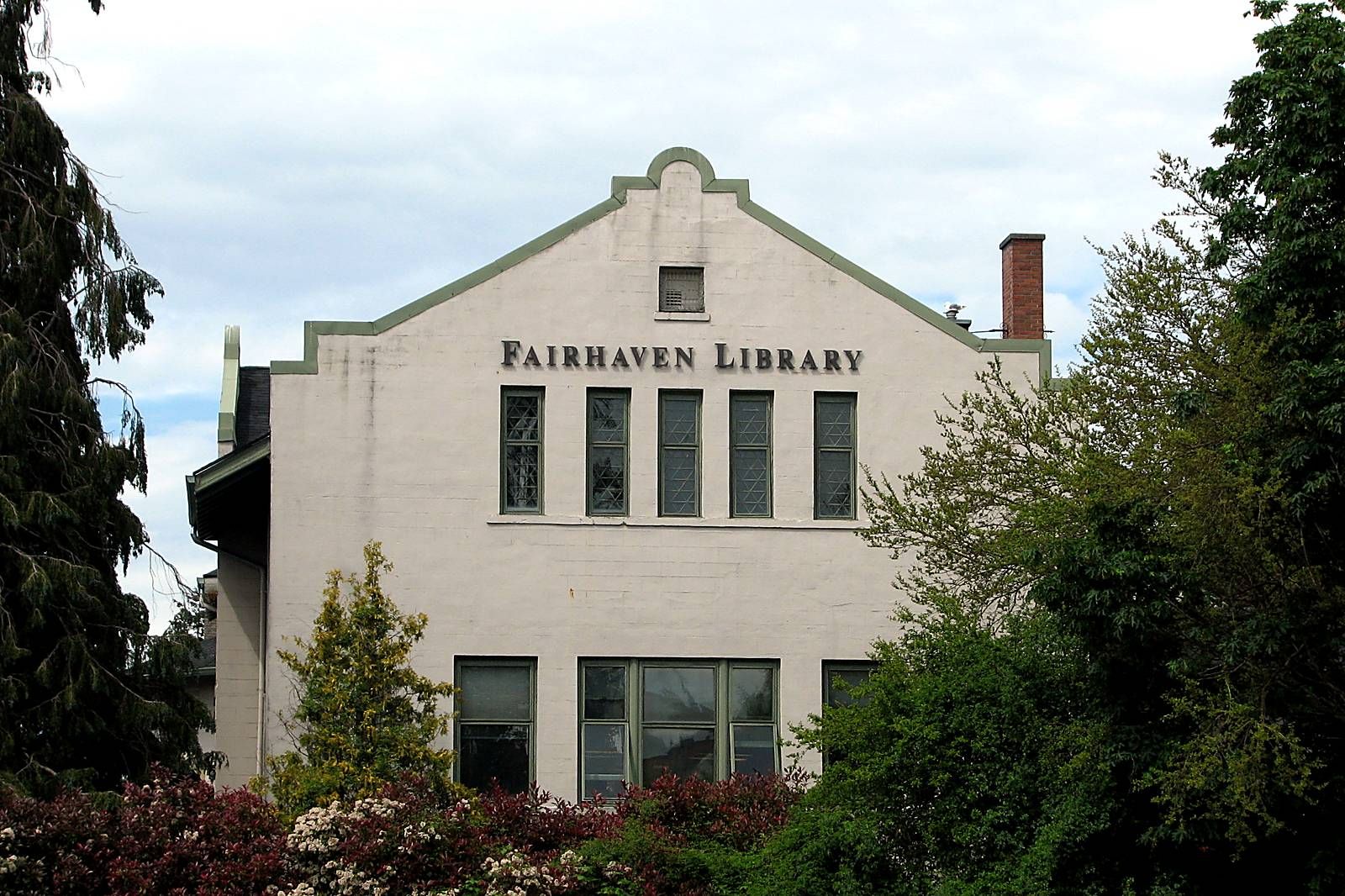
The Fairhaven Library on 12th Street — one of the neighborhood’s everyday civic anchors. Photo adapted from Steven Pavlov, CC BY-SA 4.0.
Getting around: the ferry, the train, and the rest of Whatcom County
Fairhaven punches well above its size for transportation. The Bellingham Cruise Terminal here is the southern terminus of the Alaska Marine Highway ferry system — you can literally board a ferry to Alaska from the neighborhood — and the Amtrak Cascades station sits about half a mile from the village, with service south toward Seattle and north toward Vancouver, B.C. Add Greyhound and the local bus network, and Fairhaven is arguably the most transit-connected residential pocket in Whatcom County.
For everyday driving, I-5 is a few minutes away, downtown Bellingham is a short hop over Sehome Hill, and Western Washington University is close enough that the campus influence is part of the neighborhood’s rhythm. Head south on Chuckanut Drive and you’re into some of the most scenic coastline in the Pacific Northwest within minutes.
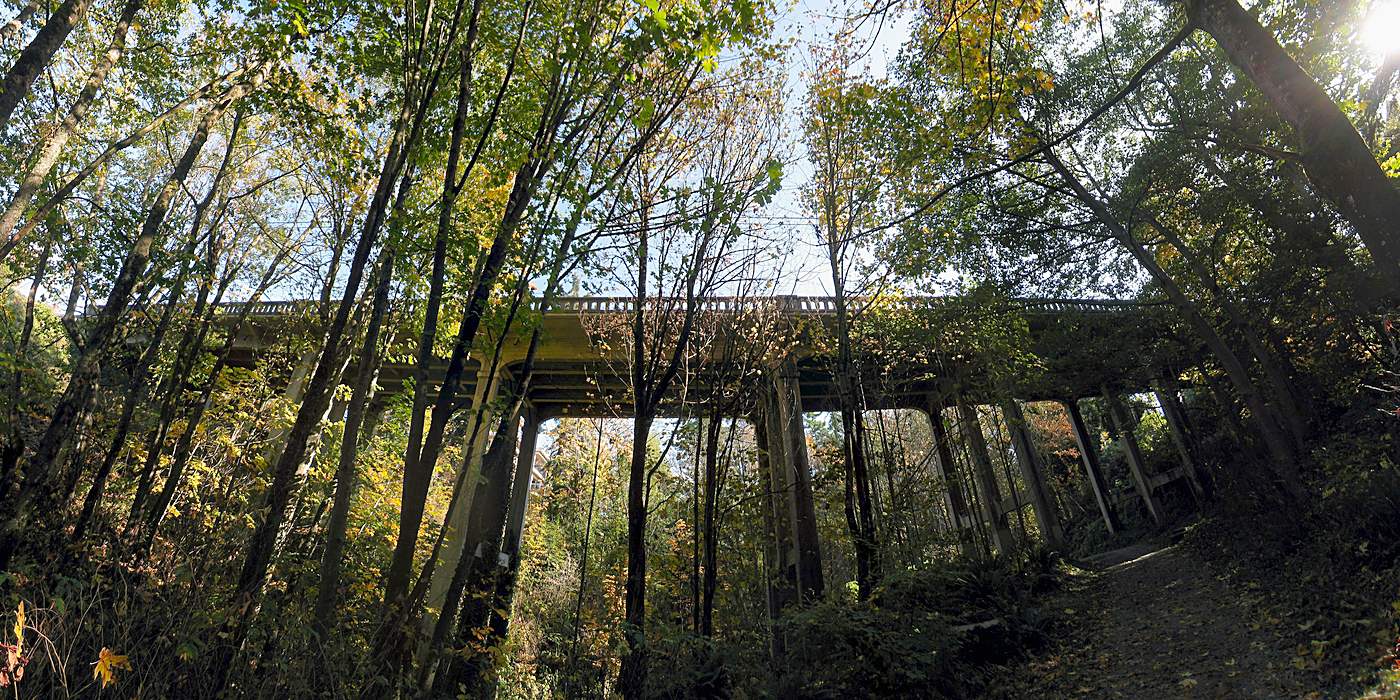
The Interurban Trail runs through the Padden Creek ravine just below Fairhaven. Photo adapted from Andrew Kvalheim, CC BY-SA 4.0.
Who is Fairhaven right for?
Fairhaven tends to be a strong fit for buyers who prioritize walkability, character, and being near the water, and who value a genuine sense of place over square footage or a big yard. Downsizers, remote professionals, second-home buyers, and anyone drawn to a historic, café-and-bookstore lifestyle usually feel at home here quickly.
It’s a weaker fit if your top priorities are a large lot, a brand-new build with a three-car garage, or the lowest possible price per square foot — those goals are generally easier to hit in Ferndale, Lynden, or Bellingham’s newer outlying subdivisions. If you’re weighing Fairhaven against other parts of the county, my broader Living in Bellingham overview is a good next read.
Curious what your Fairhaven home is worth?
Historic and waterfront-adjacent homes need a real, local valuation — not a generic algorithm. Get a free, no-pressure estimate tailored to Fairhaven’s market.
Get My Free Home ValuationFrequently asked questions about Fairhaven
Is Fairhaven a good place to live in Bellingham?
For buyers who value walkability, historic character, and waterfront access, Fairhaven is one of the most desirable neighborhoods in Bellingham. You trade a bit of space and a price premium for a village lifestyle where shops, restaurants, parks, and transit are all within walking distance.
How much do homes cost in Fairhaven?
In 2026, the median sale price in Fairhaven has been around $725,000, versus roughly $630,000 citywide for Bellingham. Condos often start in the low $400,000s, while single-family homes generally begin around $650,000 and climb with size, view, and updates.
Is Fairhaven part of Bellingham?
Yes. Fairhaven was its own city until it consolidated into Bellingham in 1903. Today it’s a historic district in south Bellingham, sometimes still called ‘South Bellingham,’ but fully within city limits.
Why is Fairhaven so historic?
Fairhaven boomed in the late 1880s amid railroad speculation and preserved much of its 1890s red-brick commercial core. After a mid-century decline and a 1970s restoration effort, the center was designated the Fairhaven National Historic District in 1977, protecting buildings dating from 1888 to 1929.
Can you walk everywhere in Fairhaven?
In the village core and nearby streets, largely yes — shops, dining, parks, and the waterfront trail are all walkable, and the Amtrak station is about half a mile away. Homes higher on the surrounding hillsides are more car-dependent, so walkability varies by exact location.
Is Fairhaven a good investment?
Fairhaven’s limited supply, protected historic core, and enduring demand have historically supported strong values, though like anywhere it moves with the broader market. Its walkability and proximity to WWU also make it appealing for long-term rental demand. Any specific purchase should be evaluated on its own numbers.
Categories
Recent Posts






Local Bellingham Agent
Tommy Mutchler
Thinking about a move in Whatcom County?
I'll help you stay competitive and make your next move feel easy. Book a free, no-pressure Home Goals call and leave with a clear plan.
Connect With Tommy15 minutes • No obligation
GET MORE INFORMATION